Wahoo Fishing in Panama City Beach, FL
Chasing One of the Gulf’s Fastest Offshore Predators
Wahoo fishing in Panama City Beach offers a very different kind of offshore experience. These sleek, hard-hitting fish are known for sudden strikes, powerful runs, and the kind of bite that can change the pace of a trip in an instant. For anglers who enjoy trolling offshore and covering water in search of a serious predator, wahoo are one of the most exciting targets in the Gulf.
Unlike fish that stay tight to reefs or structure, wahoo are usually targeted farther offshore around current breaks, blue water, and bait-rich areas. Captain Mike offers wahoo fishing charters built around those offshore opportunities, using timing, water conditions, and local knowledge to put anglers in the best position when these fish are feeding. The result is a more specialized trolling experience that feels fast, focused, and highly rewarding when everything comes together.
Quick Facts: Mahi Mahi Fishing
 Season: Peak fall through winter, with opportunities in spring (peak summer)
 Best Trip Type: Offshore trolling
 Typical Depth: Surface to deep trolling zones, often around breaks and blue water
 Catch & Keep? Yes, within FWC regulations
 Family Friendly? Yes, with crew guidance
Wahoo We Target in Panama City Beach, FL
Wahoo (Acanthocybium solandri)
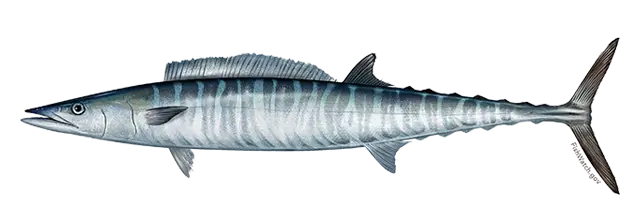
Wahoo charters in Panama City Beach target a single offshore species, wahoo (Acanthocybium solandri). This is the fish anglers mean when they talk about chasing wahoo in the Gulf, and it is typically pursued on offshore trolling trips when water conditions, season, and bait movement line up.
Around here, wahoo are often part of a mixed offshore catch rather than the only fish on the trip. That is part of what makes them such an exciting target. When one shows up in the spread, it can quickly become the fish everyone is talking about on the ride home.
What Makes Wahoo So Unique?
Wahoo stand apart from other offshore fish because they close on a bait fast and turn a quiet troll into chaos in seconds.
Built for Speed, Not Power
Wahoo are shaped differently than many other offshore species. Instead of a thick, heavy body built for long fights, they have a long, narrow profile designed to move efficiently through the water.
That design allows them to reach speeds estimated around 40 to 60 miles per hour, which is faster than most of the fish anglers commonly target in the Gulf. The result is not just a “fast fish,” but one that can close distance on a bait almost instantly.
A Strike That Leaves No Time to React
Because of that speed, wahoo do not approach a bait slowly or circle before committing. They tend to strike cleanly and keep moving, which is why bites often feel sudden and decisive rather than gradual.
Compared to species that nibble, peck, or make multiple passes, a wahoo bite is usually a single, committed hit. By the time you realize what happened, the fish is already running.
Short, Intense Fights
Wahoo fight differently than fish known for drawn-out battles. Instead of long, grinding fights, they rely on quick bursts of speed and powerful initial runs.
That makes the experience feel fast and high-energy, but also more about timing and execution than endurance. It is a different kind of challenge than fighting a bottom fish or a slower, heavier species, and that contrast is part of what makes wahoo so memorable.
When Is Wahoo Season in Florida?
Wahoo can be caught in Florida year-round, but the best fishing usually happens during the cooler months. In the Gulf of America, fall and winter often bring cleaner water, stronger current edges, and temperature changes that concentrate bait offshore. Those conditions make it easier to locate the kind of high-speed feeding activity wahoo are known for.
| Species | Season | Harvest Limit |
| Wahoo | All Year (Best in Fall through Winter) | 2 per person per day |
Note: Always check the latest regulations from the Florida Fish and Wildlife Conservation Commission (FWC) before planning your trip. Season dates and limits can change based on state and federal updates.
How We Catch Wahoo: High-Speed Trolling Offshore
Wahoo are typically caught by covering water offshore and targeting areas where fast-moving predators feed along current edges and temperature breaks. Unlike species that gather around floating structure, wahoo are more often found along open-water transitions where bait is pushed together.
Our trips focus on locating those offshore conditions and adjusting trolling patterns to match how wahoo feed in that moment.
What we look for offshore:
- Temperature breaks and color changes in the water
- Current edges where bait is concentrated
- Clean blue water pushing into the Gulf
- Bait activity in open water rather than fixed structure
Typical setups and techniques:
- Trolling at higher speeds to match how wahoo chase bait
- Using lures designed to stay stable and track clean at speed
- Spreading lines at different distances to cover more water
- Adjusting trolling patterns based on current, water clarity, and conditions
Because wahoo are often part of a mixed offshore bite, this approach allows anglers to stay flexible while still being ready for that sudden, high-speed strike when the opportunity shows up.
Ready for a Shot at Wahoo?
Some fish make a trip fun. Wahoo can make it unforgettable. Captain Mike Charters fishes the right water, season, and conditions to give anglers a real shot when these high-speed predators are in range.
Book Your Trip Today
Frequently Asked Questions About Wahoo Fishing
What is a wahoo fish?
Wahoo are fast-moving offshore fish found in warm ocean waters, including the Gulf of Mexico. They are pelagic predators, meaning they roam open water rather than staying near reefs or the bottom, and are commonly targeted on trolling trips.
Is wahoo the same as ono?
Yes. “Ono” is the Hawaiian name for wahoo. Both names refer to the same species, and the fish is known for its speed, firm meat, and excellent flavor.
Can you eat wahoo?
Yes. Wahoo are considered one of the best eating fish in the Gulf, with firm, mild meat that works well grilled, blackened, or seared.
What does wahoo taste like?
Wahoo has a mild, slightly sweet flavor with a firm texture. It is often compared to tuna or swordfish, but with a cleaner taste and less oiliness.
How big do wahoo get?
Wahoo can grow to over 100 pounds, though most fish caught around Panama City Beach are smaller. Even at moderate sizes, they are strong and fast fish that provide an exciting catch.
What does a wahoo look like?
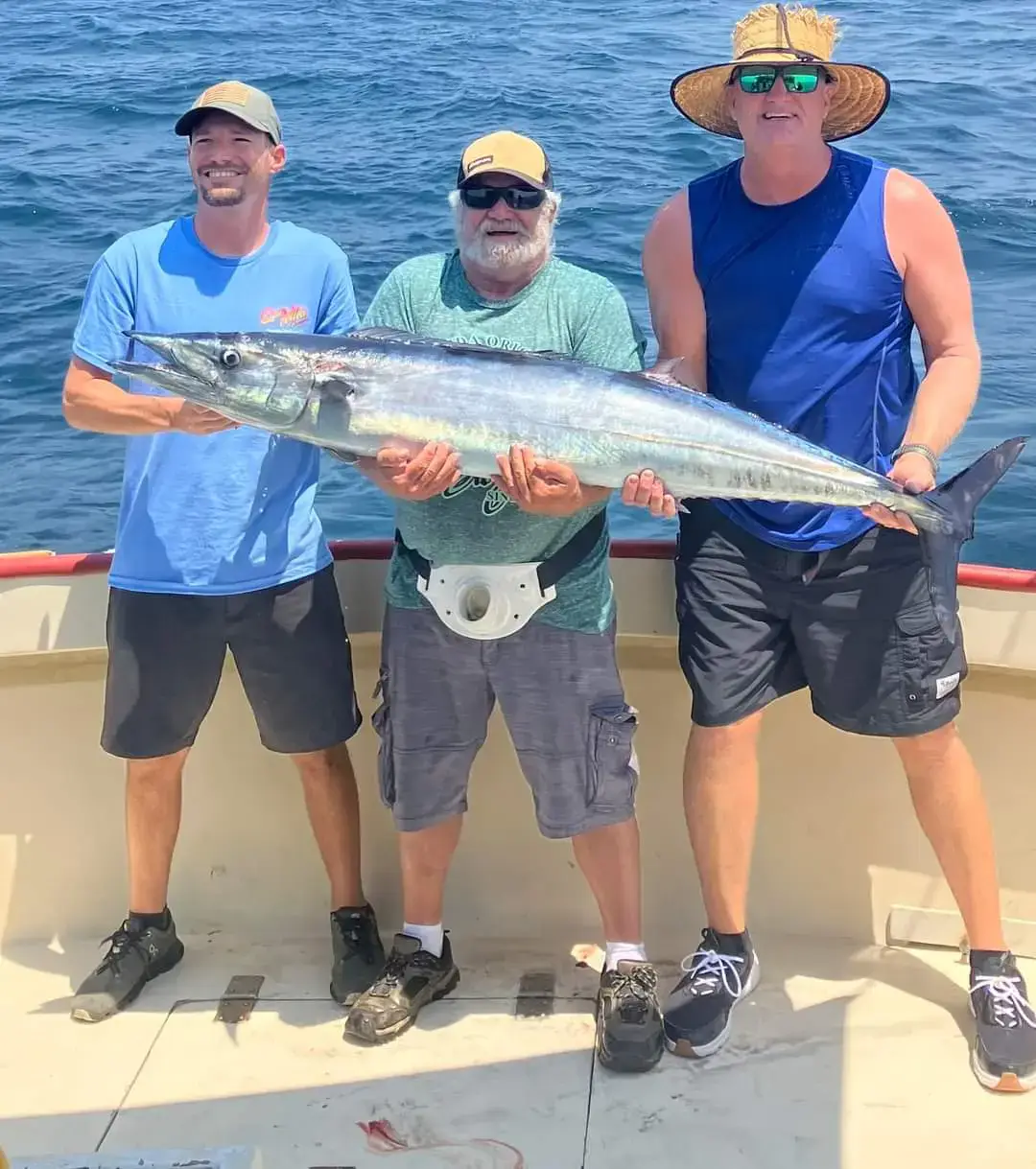
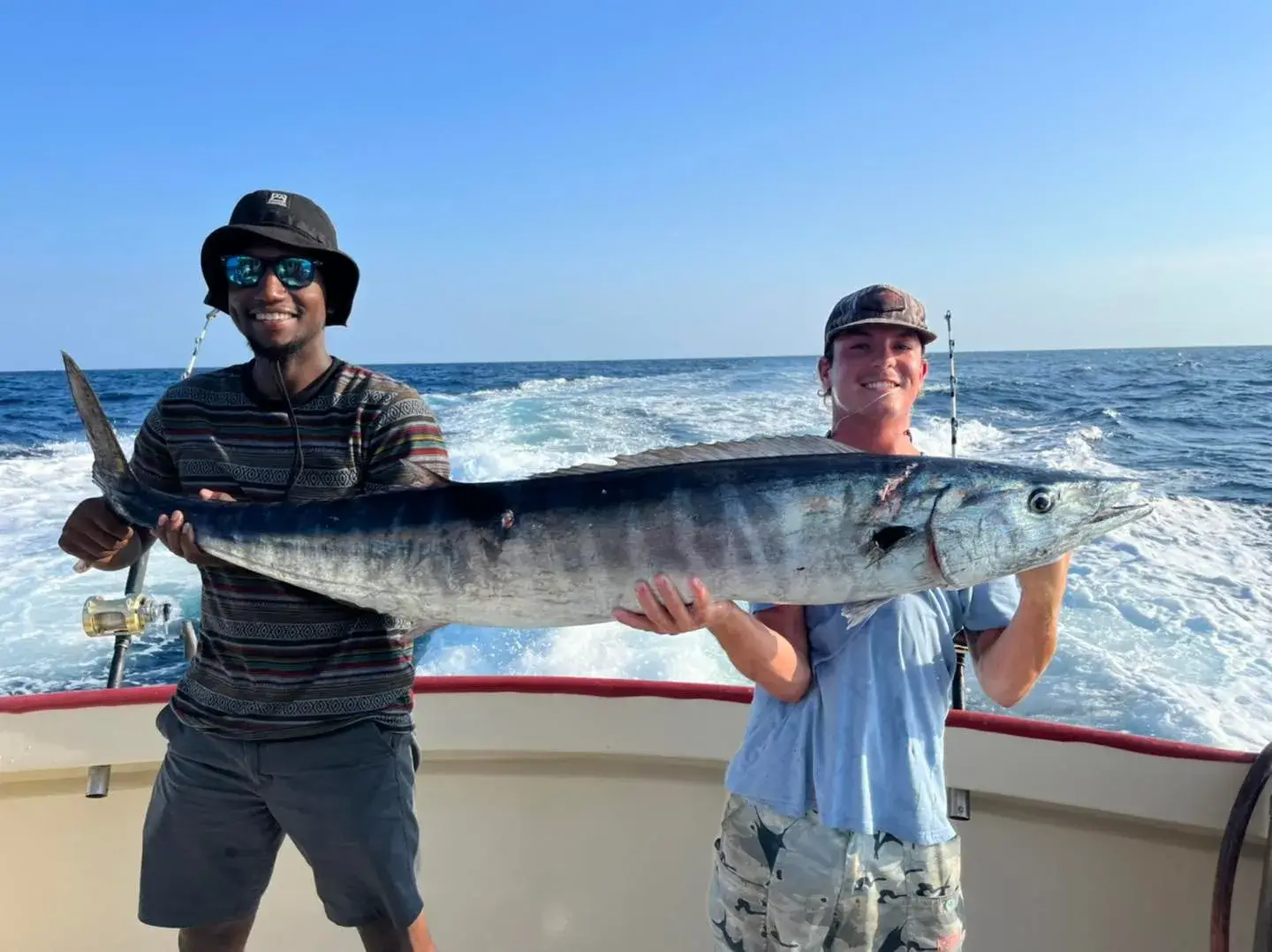
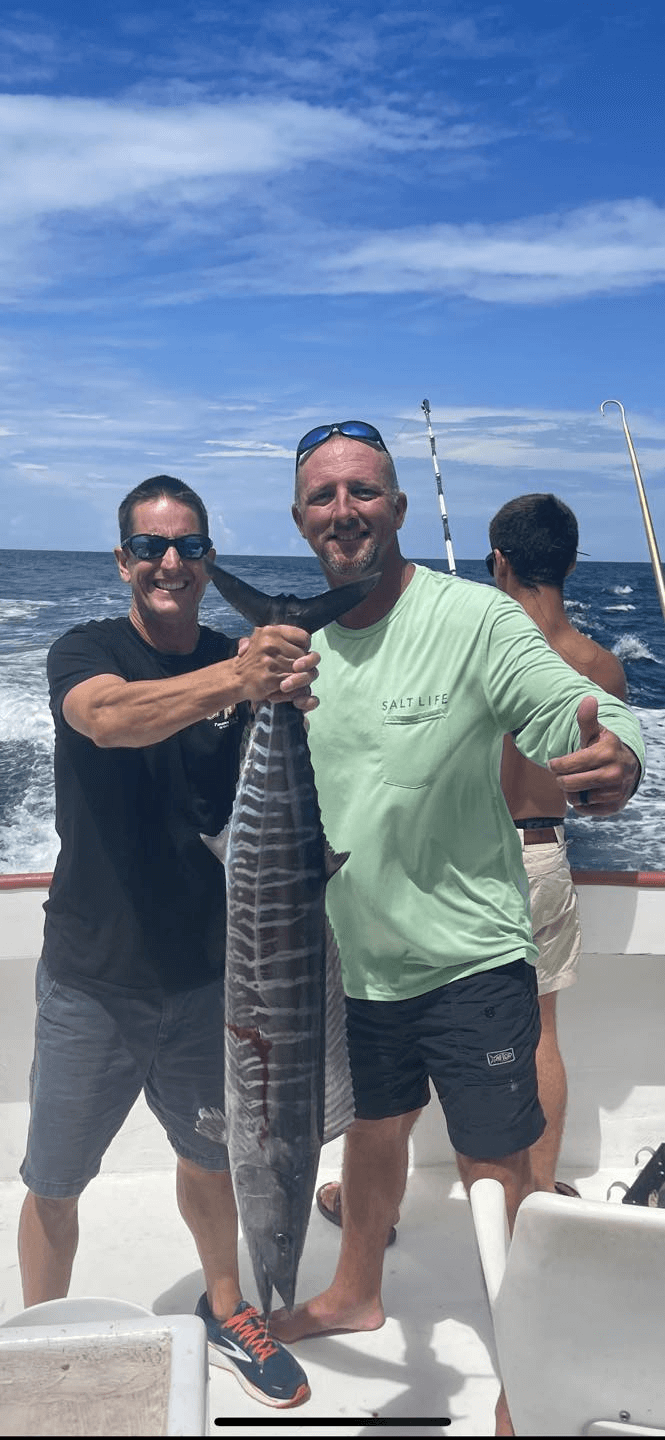
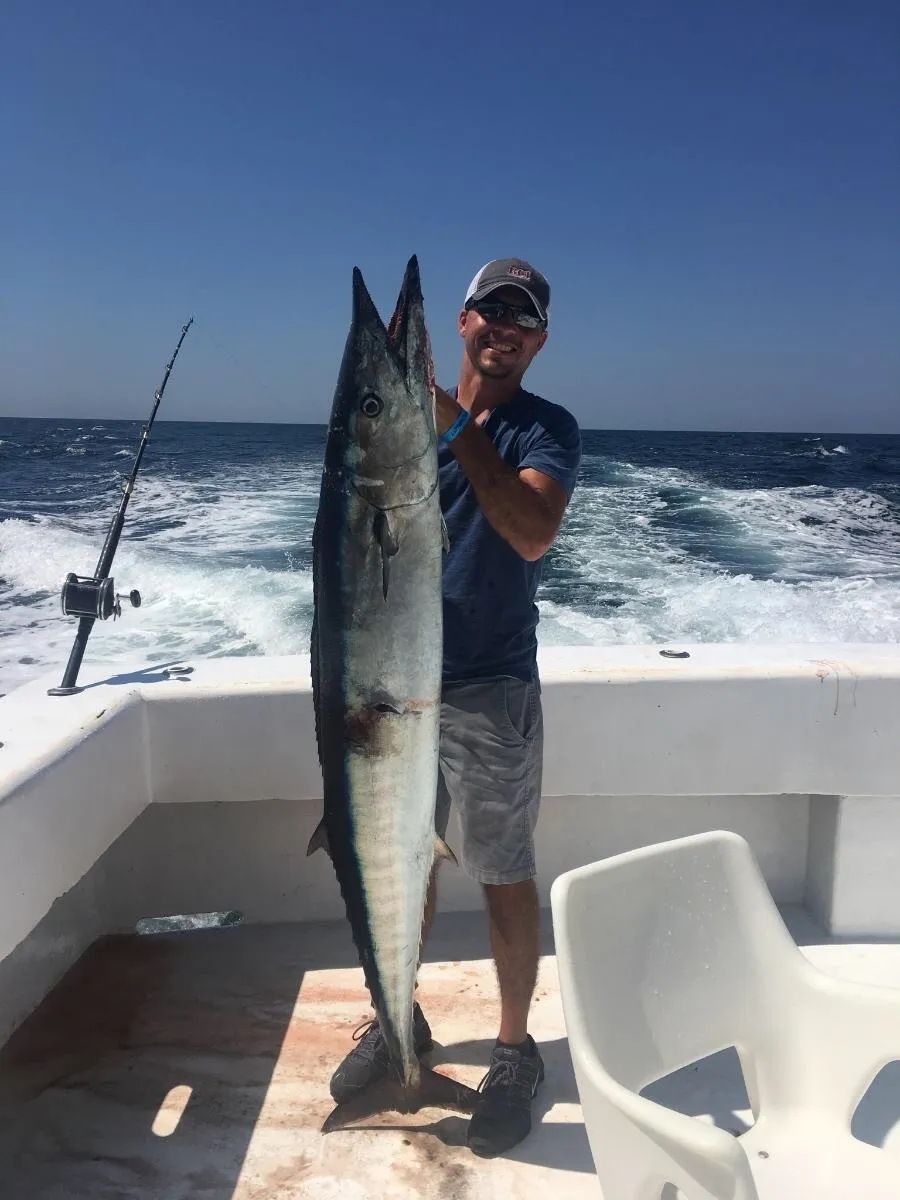
Wahoo have a long, streamlined body with a pointed head and sharp teeth. They are typically silver with bold vertical blue stripes along their sides, which are especially visible when the fish is fresh.
Are wahoo dangerous or do they bite?
Wahoo are not dangerous to people, but they do have very sharp teeth and should be handled carefully on the boat. Their bite is part of what makes them effective predators in offshore waters.
When is the best time to catch wahoo in Florida?
Wahoo can be caught year-round, but the best fishing in Florida usually happens during the cooler months, especially fall and winter when offshore conditions are most favorable.
Real Guests. Real Wahoo. Real Memories.
Take a look at some of the standout wahoo catches from past trips with Captain Mike Charters. From first-time offshore anglers to seasoned fishermen, these photos capture the sudden strikes, long runs, and big moments that make wahoo such a prized Gulf target.